


Council of Islamic Ideology

فَاسْأَلُوا أَهْلَ الذِّكْرِ إِنْ كُنْتُمْ لَا تَعْلَمُونَ  (النحل : ۴۳) So, ask the people (having the knowledge) of the Reminder (the earlier Scriptures), if you do not know. | سو اگر تمہیں اس بات کا علم نہیں ہے تو جو علم والے ہیں ان سے پوچھ لو۔

Introduction

The Council Of Islamic Ideology

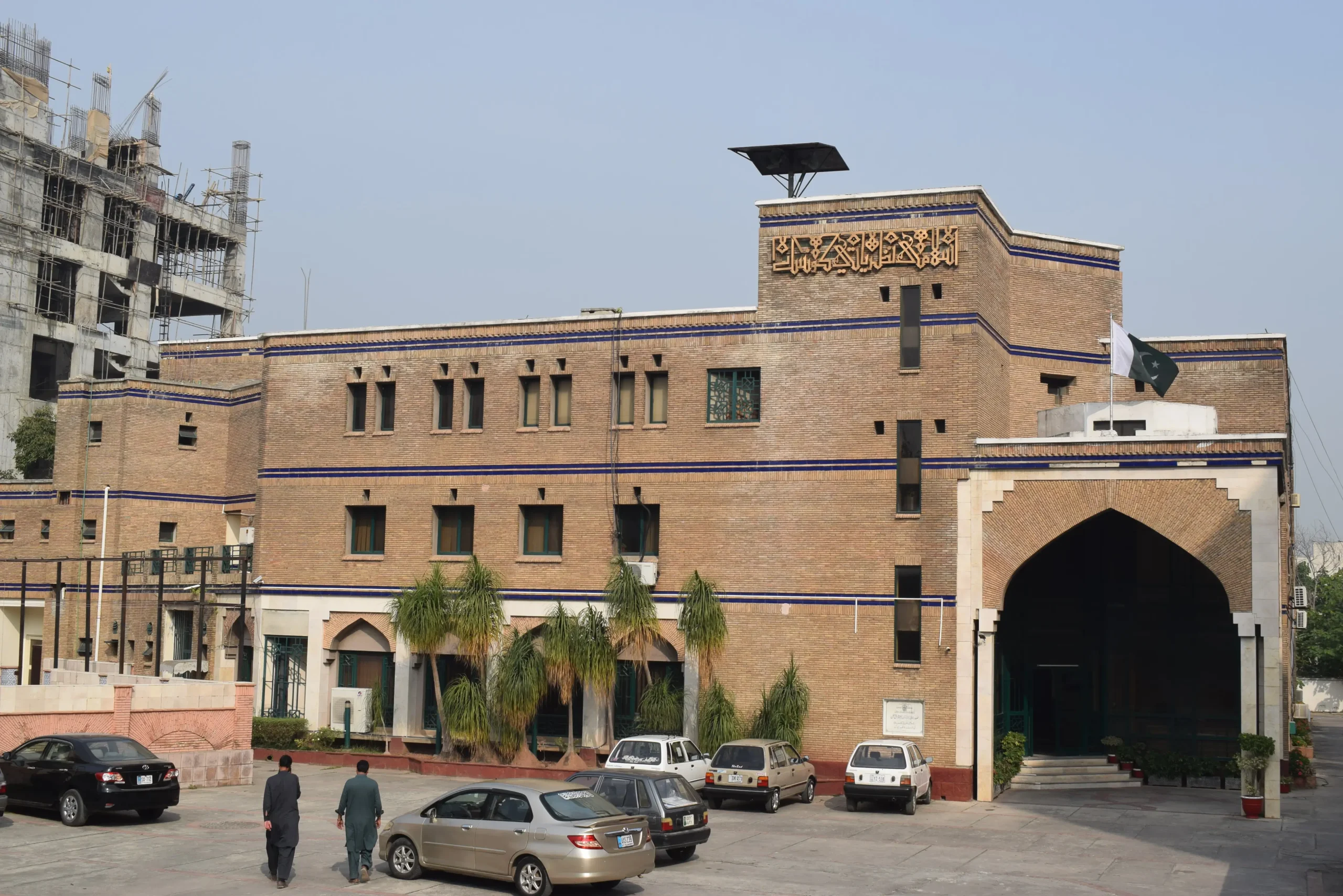
CII Building

The Council of Islamic Ideology is a constitutional body that advises the legislature on whether a certain law is repugnant to Islam, in light of the Qur’an and Sunnah. This website is designed to provide information about the activities of the Council.

The Council Of Islamic Ideology - History

Step 1 – Islamic Commission

The Council of Islamic Ideology was initially proposed in the first Constitution of Pakistan 1956. It was then named as to be Islamic Commission which was to be established within one year of promulgation of the Constitution. Article 198 (1) to (4) deals with Islamic Commission.
The Constitution of Pakistan 1956 article 198 (1-4)

Step 2 – Advisory Council

The Council of Islamic Ideology was established as Advisory Council of Islamic Ideology on August 1, 1962 under Article 199 of the Constitution of the Islamic Republic of Pakistan 1962, which provided for the constitution of the Council (Articles 199 – 203), its functions (Article 204), rules of procedure (Article 205), and the establishment of Islamic Research Institute (Article 207).
[The Constitution of Pakistan 1962, Articles 199 – 207]

Step 3 – Council of Islamic Ideology

Advisory Council of Islamic Ideology was re-designated as Council of Islamic Ideology in Article 228 of the 1973 Constitution with provisions for its composition (Article 228), Procedure for reference to the Council (Article 229), its functions (Article 230), and Rules of Procedure (Article 231).
[The Constitution of Pakistan 1973, Articles 228 – 231)
.

The office of the council was located in Lahore where it continued to work until 26 September 1977 when its offices were shifted to Islamabad. The Council shifted to its own building in September, 1995.

Since its establishment, the Council has held 245 meetings, reviewed numerous laws, recommended various legislative measures, and submitted more than 120 reports to the relevant authorities.

In addition to reviewing existing laws, the Council’s current functions include submitting recommendations to Parliament, examining references received from the President of Pakistan, Provincial Governors, and both Houses of Parliament, conducting research, publishing reports and studies, organizing seminars and conferences, and disseminating its work through its official website.

The Council Of Islamic Ideology - Functions

As per Article 230 of the Constitution)

1. The functions of the Islamic Council shall be:

    • to make recommendations to Majlis-e-Shoora (Parliament) and the Provincial Assemblies as to the ways and means of enabling and encouraging the Muslims of Pakistan to order their lives individually and collectively in all respects in accordance with the principles and concepts of Islam as enunciated in the Holy Qur’an and Sunnah;
    • to advise a House, a Provincial Assembly, the President or a Governor on any question referred to the Council as to whether a proposed law is or is not repugnant to the Injunctions of Islam;
    • to make recommendations as to the measures for bringing existing laws into conformity with the Injunctions of Islam and the stages by which such measures should be brought into effect; and
    • to compile in a suitable form, for the guidance of Majlis-e-Shoora(Parliament) and the Provincial Assemblies, such Injunctions of Islam as can be given legislative effect.

2. Where a House, a Provincial Assembly, the President or the Governor, as the case may be, considers that, in the public interest, the making of the proposed law in relation to which the question arose should not be postponed until the advice of the Islamic Council is furnished, the law may be made before the advice is furnished:

Provided that, where a law is referred for advice to the Islamic Council and the Council advises that the law is repugnant to the Injunctions of Islam, the House or, as the case may be, the Provincial Assembly, the President or the Governor shall reconsider the law so made.

3. The Islamic Council shall submit its final report within seven years of its appointment, and shall submit an annual interim report.The report, whether interim or final, shall be laid for discussion before both Houses and each Provincial Assembly within six months of its receipt, and [Majlis-e-Shoora (Parliament)] and the Assembly, after considering the report, shall enact laws in respect thereof within a period of two years of the final report.

Council's Composition

As Provided under Article 228 of the Constitution of the Islamic Republic of Pakistan, 1973

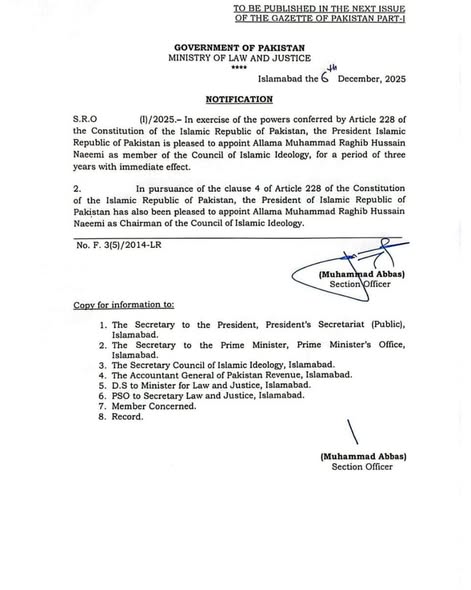
The Council of Islamic Ideology consists of not less than eight and not more than twenty members, including the Chairman, all of whom are appointed by the President of Pakistan.

The members are selected from among persons having knowledge of the principles and philosophy of Islam as enunciated in the Holy Qur’an and Sunnah, or possessing an understanding of the economic, political, legal, or administrative issues of Pakistan.

In constituting the Council, due consideration is given to the representation of various schools of Islamic thought. The Constitution further provides that:

  • Not less than two members shall be, or shall have been, Judges of the Supreme Court of Pakistan or a High Court;
  • Not less than one-third of the members shall be persons having at least fifteen years’ experience in Islamic research or instruction; and
  • At least one member shall be a woman.

(Article 228, Constitution of the Islamic Republic of Pakistan, 1973)